Emergence of the Mahāyāna
Subscribe to this topic via: RSS
How the Mahāyāna arose in ancient India and how it changed as it spread to the rest of Asia.
Caution! Under Construction
Please be aware that this tag is still under construction and as such is missing information and may be changed or removed at any time. For all the content under consideration for this tag, see the “Emergence of the Mahāyāna” folder on Google Drive.
Table of Contents
Books (9)
Featured:
-
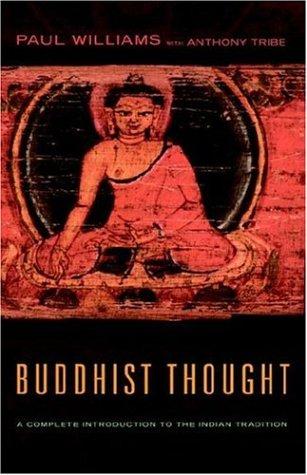
The concept of the dharmakaya, derived from the Buddha’s teachings collected in the corpus of early Buddhist literature, was further developed as a collection of pure dharmas by the Sarvastivadins. It finally evolved into the cosmic body, an impersonal principle supporting all phenomena through its identification with the tathata which pervades the whole universe in Mahāyāna Buddhism.
-
322 pages[recommended but under copyright]
See also:
Canonical Works (4)
Featured:
-
A lengthy, devotional, proto-Mahāyāna Sūtra popular in Central Asia which lists a thousand Buddhas along with their particulars.
-
A famous formulation of phenomenology from Indian Buddhism, which became influential in the Mahayana Tradition.
See also:
Readings (50)
Featured:
-
⭐ Recommended
Deep contemplative experiences and the philosophical conclusions which they yield are beyond history. Or are they?…
-
⭐ Recommended
… wealth and power did not seem to ease disruptive conflict
-
⭐ Recommended
Three sūtras in the SA which deal with emptiness especially attracted the attention of the author of the Mahāprajñāpāramitopadeśa
-
⭐ Recommended
A religion’s power lies in its symbols, and those symbols are by their very nature not reducible to a set of propositions, or a body of doctrines
-
Before the translation proper, the Introduction discusses the source and its editions, provides an overview of the doctrinal content of these two chapters, and discusses the voice and policy of our translation. The English translation is not an attempt to return to its now unknown Sanskrit original, nor by reading it through later Chinese traditions, but as close as we can understand to Kumārajīva’s own understanding and translation technique. The entire English translation is critically annotated, marking significant points of interest both internally within the text, but also externally when compared to the other Chinese translations and later Sanskrit recensions.
-
This essay explores the image-text relationship between the ca. 12-century monumental Maitreya bodhisattva sculpture within a narrow tower in the village of Mangyu and passages from the Gaṇḍavyūha Sūtra.
-
How the śikṣādattaka observance gradually mixed with emerging Mahāyāna repentance ceremonies to produce a ritual for the atonement of Pārājika offenses in medieval China.
-
⭐ Recommended
… the redefinition of arahantship cannot be looked upon as successful. The relaxed criteria would have enabled many monks of lesser attainment, as well as status-seeking monks, to proclaim themselves arahants. […] In its devalued form it simply could not satisfy the spiritual aspiration of those who sought the ultimate goal.
-
Three versions (Sanskrit, Pāḷi, and Chinese) of some verses from Snp 3.6 translated and compared, showing how subtle shifts in meaning between the Pāḷi/Sanskrit and Chinese contributed to / reflected the growing “Mahayana” sentimentality in early Central / East Asian Buddhism.
-
By examining these early Mahāyāna Sūtras and Śāstras, and also early non-Mahāyāna Pāli nikāyas, abhidhammas and commentaries, I argue that anārambaṇā maitrīkaruṇā became unique to Mahāyāna because of the fundamental shift of goal from mainstream Buddhism; why śrāvakas do not practise anārambaṇā maitrīkaruṇā is not originally because of lack of non-conceptual wisdom or lack of understanding of the emptiness of Dharma, but because for śrāvakas and mainstream Buddhists, maitrī and karuṇā are not essential in attaining their bodhi. Śrāvakas are those who learn and uphold the teachings taught by the Buddha by actualising the true nature of dharma (dharmatāṃ sākṣātkurvanti).
-
This paper focuses on a section of the Gandavyuha Sutra (Book 39 of the Avatamsaka Sutra), which lists and frequently explains the Buddhalakṣaṇas. The study introduces a new translation of the passage from the original Sanskrit, and compares its descriptions to other relevant Pali, Sanskrit and Tibetan sources. In most cases the Gaṇḍavyūha Sūtra offers the most convincing explanation of the relevance and/or origin of the lakṣaṇa.
-
This paper reconsiders the idea that Indian Mahāyāna was specially involved with or indebted to the use of writing.
25 pages -
Did Indian Buddhists believe in astrology, and, if so, how did they incorporate it into their religious framework?
-
This preliminary presentation and discussion will at least give a general indication of the significance of these discoveries for the study of early Mahayana in general and particularly in Gandhāra.
-
Drawing upon an Indian Mahāyāna Buddhist compendium of bodhisattva practice, this paper explores the role bodhisattva bodies play in the ethical development of other living beings.
-
This small Sutta deals with the veneration in which the Buddha held the Dharma, the doctrine which he had discovered on the night of his enlightenment and which he had chosen as his teacher. This text throws some light on the nature of the Buddha and the Dharma as they were conceived by the first Buddhists.
-
The world heritage site of the Mogao caves, along the ancient Silk Road, consists of 492 richly painted Buddhist cave temples dating from the fourth to fourteenth century. Cave 465 at the northern end of the site is unique in its Indo-Tibetan tantric Buddhist style, and like many other caves, the date of its construction is still under debate. This study demonstrates the powers of an interdisciplinary approach that combines material identification, palaeographic analysis of the revealed Sanskrit writings and archaeological evidence for the dating of the cave temple paintings, narrowing it down to the late twelfth century to thirteenth century.
-
Zhiyi was notable as a systematizer and domesticator of Buddhist knowledge, and particularly for his writings on śamatha and vipaśyanā meditation. The excerpt translated below is a complete chapter from the shorter of his meditation treatises. It focuses specifically on how various strands of Indian and Chinese medical and religious knowledge could be employed to diagnose and treat illness while the practitioner remained engaged in seated meditation.
-
Vasubandhu belongs to the Sarvāstivāda sect but does not recognize the authority of Sarvāstivāda Abhidharmaśāstras. This seems to be the basic definition of “Sautrāntika.”
-
Nagarjuna gives a defense of his skepticism by insisting that he makes no proposition concerning the nature of reality. B. K. Matilal has argued that this position is not an untenable one for a skeptic to hold, using as an explanatory model Searle’s distinction between a propositional and an illocutionary negation. The argument runs that Nagarjuna does not refute rival philosophical positions by simply refuting whatever positive claims those positions might make, but rather he refuses the very act of making an assertion.
-
… the identification of Vairocana in these caves suggests that some form of the Tantric soteriological methodology explained in the Mahāvairocanasūtra was extant in the fifth century
See also:
Audio/Video (6)
Featured:
-
-
One of the great archeological finds of the 20th century, the Gandhāran Buddhist Texts, dating from the 1st century CE, are the oldest Buddhist manuscripts ever discovered. Richard Salomon discusses his pioneering research on these fascinating manuscripts, how the then obscure Gāndhārī language was deciphered, the historical and religious context from which these texts emerged, and the Gandhāran influence on other parts of the Buddhist world.
59 min
See also: